
Introduction
Artificial Intelligence (AI) is transforming the way food is grown, prepared, and consumed. As the global population continues to increase, the demand for sustainable agriculture, efficient food production, and healthier eating habits has never been greater. Traditional farming and cooking methods are evolving with the help of advanced technologies, making food production smarter and more efficient than ever before.
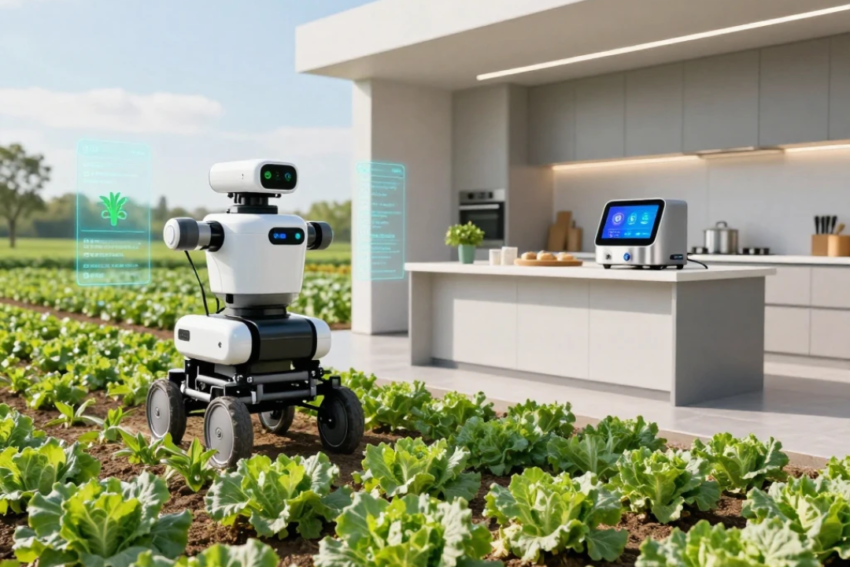
The concept of Smart Food combines Artificial Intelligence, automation, robotics, and data analytics to improve every stage of the food journey—from farms to kitchens and dining tables. AI enables farmers to grow crops more efficiently, helps food manufacturers improve quality, and allows restaurants to deliver personalized dining experiences. Smart kitchens powered by AI also assist home cooks and professional chefs in preparing meals with greater accuracy and consistency.
This article explores the role of AI in modern agriculture and cooking, highlighting its applications, benefits, challenges, and future potential in creating a smarter and more sustainable food industry.
What Is Smart Food?
Smart Food refers to the integration of modern technologies such as Artificial Intelligence, machine learning, robotics, and the Internet of Things (IoT) into agriculture, food production, cooking, and food distribution.
AI systems collect and analyze large amounts of data to improve decision-making, automate repetitive tasks, and optimize food production. These technologies help increase efficiency, reduce food waste, improve food safety, and support environmentally friendly practices.
From monitoring crop health to creating personalized recipes, Smart Food is reshaping the future of the global food industry.
The Role of AI in Modern Agriculture
Agriculture is the first and most important stage of food production. Artificial Intelligence is helping farmers produce more food while using fewer natural resources.
1. Precision Farming
Precision farming uses AI to monitor crops and soil conditions in real time.
AI analyzes information such as:
- Soil moisture
- Nutrient levels
- Weather forecasts
- Crop health
- Pest activity
Based on this analysis, farmers receive recommendations about irrigation, fertilization, and pest control.
This improves crop yields while reducing unnecessary use of water, fertilizers, and pesticides.
2. Smart Irrigation Systems
Water is one of the most valuable resources in agriculture.
AI-powered irrigation systems determine exactly when and how much water crops need.
Instead of watering entire fields equally, AI delivers water only where it is required.
Benefits include:
- Water conservation
- Healthier crops
- Lower irrigation costs
- Reduced environmental impact
3. Crop Disease Detection
Plant diseases can spread quickly and significantly reduce harvests.
AI uses drones, cameras, and image recognition technology to identify signs of disease before they become visible to the human eye.
Early detection allows farmers to take immediate action, reducing crop losses and protecting food production.
4. Agricultural Robotics
Modern farms increasingly use AI-powered robots for repetitive agricultural tasks.
These robots can:
- Plant seeds
- Remove weeds
- Harvest crops
- Monitor plant growth
- Apply fertilizers accurately
Automation reduces labor shortages while increasing farming efficiency.
5. Weather Prediction and Crop Planning
Weather conditions directly affect agricultural productivity.
Artificial Intelligence analyzes historical climate data, weather forecasts, and environmental conditions to predict farming risks.
Farmers can plan planting and harvesting schedules more effectively, reducing losses caused by extreme weather.
AI in Food Processing
After harvesting, AI continues improving efficiency during food processing.
Food manufacturers use Artificial Intelligence for:
- Sorting products
- Detecting defects
- Packaging food
- Monitoring hygiene
- Predicting equipment maintenance
Computer vision systems inspect food products faster and more accurately than manual inspections.
This improves food quality while reducing production costs.
AI in Modern Cooking
Artificial Intelligence is changing kitchens just as dramatically as farms.
Smart cooking technologies improve meal preparation for restaurants, hotels, and home kitchens.
Smart Kitchen Appliances
Modern AI-powered appliances include:
- Smart ovens
- Intelligent refrigerators
- Automatic coffee machines
- Smart air fryers
- Connected cooking assistants
These appliances automatically adjust cooking time, temperature, and humidity for different recipes.
This reduces cooking errors while improving food quality.
AI Recipe Recommendations
Artificial Intelligence can recommend recipes based on:
- Available ingredients
- Dietary restrictions
- Personal preferences
- Nutrition goals
- Previous cooking habits
Recipe recommendation systems help users prepare balanced meals while reducing food waste.
Personalized Nutrition
AI is making healthy eating more personalized.
By analyzing health data, fitness goals, allergies, and eating habits, AI recommends customized meal plans for individuals.
This helps people maintain healthier lifestyles while enjoying foods that match their nutritional needs.
Robotic Cooking Systems
Restaurants increasingly use robotic cooking equipment to prepare meals consistently.
Robotic chefs can:
- Cook ingredients precisely
- Measure portions accurately
- Maintain food safety standards
- Reduce preparation time
Human chefs still play an essential role in creativity and presentation, while robots handle repetitive tasks.
AI Improves Food Safety
Food safety is one of the biggest priorities in the food industry.
Artificial Intelligence monitors food throughout production, storage, transportation, and cooking.
Smart sensors measure:
- Temperature
- Humidity
- Storage conditions
- Food freshness
If unsafe conditions occur, AI immediately alerts operators before products become unsafe for consumers.
AI also helps identify contamination risks earlier than traditional inspection methods.
Reducing Food Waste with AI
Food waste is a global environmental challenge.
Artificial Intelligence helps reduce waste by accurately predicting consumer demand.
Restaurants and grocery stores use AI to analyze:
- Sales history
- Seasonal demand
- Local events
- Customer purchasing behavior
This information allows businesses to prepare only the amount of food that customers are likely to purchase.
AI also monitors inventory and expiration dates to prevent unnecessary waste.
Benefits of Smart Food and AI
Artificial Intelligence provides numerous advantages across agriculture and cooking.
Increased Productivity
Automation allows farmers and food businesses to produce more with fewer resources.
Better Food Quality
AI ensures consistent quality through automated inspection systems.
Enhanced Food Safety
Continuous monitoring reduces contamination risks and improves compliance with food safety regulations.
Lower Operating Costs
Automation reduces labor costs while improving production efficiency.
Sustainability
AI supports environmentally friendly farming, reduces waste, and optimizes energy and water usage.
Personalized Customer Experience
AI recommends meals based on individual preferences, improving customer satisfaction.
Challenges of AI in Agriculture and Cooking
Despite its benefits, implementing AI also presents several challenges.
High Investment Costs
Advanced AI technologies require significant financial investment, especially for small farms and restaurants.
Technical Skills
Employees must receive training to operate AI-powered systems effectively.
Data Privacy
Businesses must protect customer and operational data from cyber threats.
Technology Integration
Older farming equipment and kitchen systems may require upgrades before AI can be fully implemented.
The Future of Smart Food
Artificial Intelligence will continue transforming agriculture and cooking over the coming years.
Future innovations may include:
- Fully autonomous farms
- AI-controlled greenhouses
- Self-cooking kitchen appliances
- Intelligent food packaging
- Personalized nutrition assistants
- Advanced agricultural drones
- Automated restaurant kitchens
As AI technology becomes more affordable, businesses of all sizes will be able to adopt Smart Food solutions.
Consumers will enjoy healthier meals, faster service, and safer food while businesses improve efficiency and sustainability.
Why AI Matters for the Future of Food
The global food industry faces increasing pressure to feed a growing population while protecting natural resources.
Artificial Intelligence provides practical solutions by helping farmers grow more food, reducing production costs, improving food quality, and minimizing waste.
By combining human expertise with intelligent technology, businesses can create a more resilient and sustainable food system.
AI is not replacing people—it is supporting them by automating repetitive tasks and providing valuable insights for better decision-making.
Conclusion
Smart Food represents the future of agriculture, cooking, and food production. Artificial Intelligence is transforming every stage of the food journey, from precision farming and automated processing to smart kitchens and personalized nutrition.
The benefits of AI include higher productivity, improved food safety, reduced waste, lower operating costs, and better customer experiences. Although challenges such as investment costs, technical training, and data security remain, the long-term advantages make AI an essential technology for the modern food industry.
As innovation continues to accelerate, Smart Food powered by Artificial Intelligence will help create a healthier, more sustainable, and more efficient global food system. Businesses that embrace AI today will be better prepared to meet future challenges and deliver high-quality food to consumers around the world.