
Introduction
Artificial Intelligence (AI) is transforming the global food industry by introducing smarter, faster, and more sustainable ways to produce, process, distribute, and serve food. As the world’s population continues to grow, the demand for high-quality food is increasing, creating new challenges for farmers, manufacturers, retailers, and restaurants. AI offers innovative solutions that improve efficiency, reduce waste, enhance food safety, and deliver better experiences for consumers.
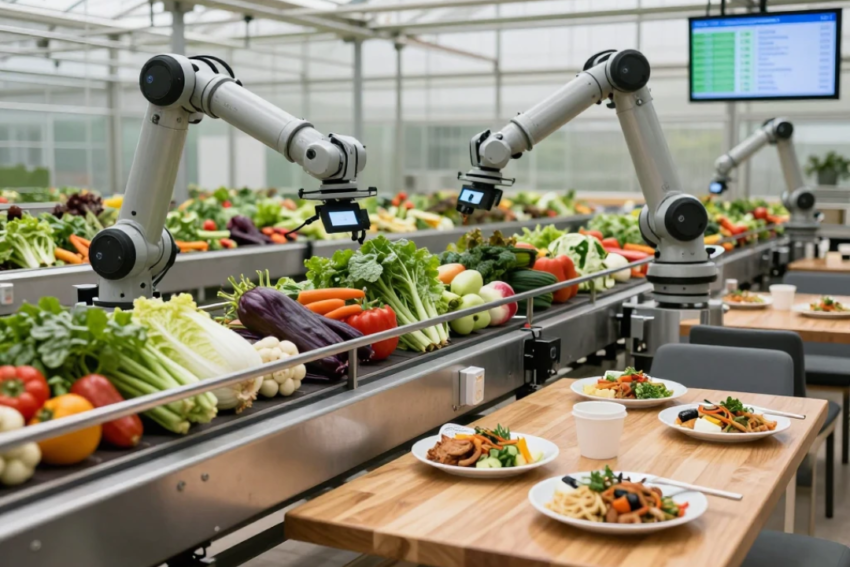
The phrase “From Farm to Table” represents the entire food supply chain, beginning with crop production and ending with the meals served to customers. AI plays an important role at every stage of this journey. From precision farming and automated harvesting to intelligent food processing and personalized dining, Artificial Intelligence is helping businesses make better decisions using data-driven insights.
This article explores how AI and food innovation are reshaping the entire food ecosystem, highlighting the technologies, benefits, challenges, and future opportunities that are changing the way food reaches our tables.
What Is AI in Food Innovation?
AI in food innovation refers to the use of Artificial Intelligence technologies such as machine learning, computer vision, robotics, predictive analytics, and automation to improve food production and supply chain management.
Unlike traditional computer programs, AI systems can analyze large amounts of information, recognize patterns, learn from experience, and continuously improve their performance. These capabilities allow businesses to solve complex problems more efficiently while reducing costs and increasing productivity.
AI is now becoming an essential technology throughout the modern food industry.
The Farm-to-Table Journey
The farm-to-table process includes several important stages:
- Farming and crop production
- Harvesting
- Food processing
- Packaging
- Transportation
- Retail distribution
- Restaurants and home cooking
Artificial Intelligence improves each of these stages by increasing efficiency, reducing waste, and ensuring higher food quality.
AI in Modern Agriculture
Agriculture is the foundation of the food supply chain, and AI is transforming traditional farming into smart farming.
Precision Agriculture
Precision agriculture uses AI to monitor crops, soil, and environmental conditions in real time.
AI analyzes data from:
- Weather stations
- Soil sensors
- Satellite imagery
- Drones
- Farm equipment
Farmers receive recommendations about irrigation, fertilization, and pest management, allowing them to maximize crop yields while minimizing resource consumption.
Smart Irrigation Systems
Water conservation has become increasingly important.
AI-powered irrigation systems monitor soil moisture and weather conditions to determine exactly how much water crops need.
Benefits include:
- Reduced water usage
- Lower farming costs
- Improved crop health
- Better environmental sustainability
Crop Disease Detection
Plant diseases can spread rapidly if not detected early.
AI uses computer vision and machine learning to identify diseases through images collected by drones and cameras.
Early detection helps farmers protect crops before major damage occurs, increasing food production while reducing pesticide use.
Agricultural Robotics
Robotic systems powered by Artificial Intelligence perform labor-intensive farming tasks such as:
- Planting seeds
- Harvesting crops
- Removing weeds
- Applying fertilizers
- Monitoring plant growth
Automation increases productivity while addressing labor shortages in agriculture.
AI in Food Processing
After crops are harvested, AI continues improving food production during manufacturing and processing.
Food processing companies use Artificial Intelligence to:
- Sort products
- Inspect food quality
- Detect contamination
- Package products
- Monitor production equipment
Computer vision systems identify damaged or defective products much faster than manual inspections.
AI also predicts equipment maintenance needs, reducing downtime and production delays.
Improving Food Safety with AI
Food safety is essential for protecting consumers and maintaining trust in food brands.
Artificial Intelligence helps monitor food safety throughout production, storage, and transportation.
AI systems monitor:
- Temperature
- Humidity
- Food freshness
- Storage conditions
- Transportation environments
If unsafe conditions occur, AI immediately alerts managers, allowing quick action before food becomes unsafe.
AI also improves food traceability, helping businesses quickly identify affected products during recalls.
AI in Supply Chain Management
Moving food efficiently from farms to consumers requires careful coordination.
Artificial Intelligence optimizes supply chain operations by analyzing demand forecasts, inventory levels, transportation routes, and warehouse conditions.
Key benefits include:
- Reduced transportation costs
- Faster deliveries
- Better inventory management
- Fresher food products
- Lower carbon emissions
Real-time tracking also improves transparency throughout the supply chain.
AI in Restaurants and Food Service
Artificial Intelligence is transforming restaurants and food service businesses by improving efficiency and customer satisfaction.
Restaurants use AI for:
- Online ordering
- Reservation management
- Menu recommendations
- Inventory tracking
- Employee scheduling
- Sales forecasting
AI-powered chatbots provide instant customer support while reducing staff workload.
Some restaurants also use robotic cooking systems that prepare meals consistently and efficiently.
Personalized Dining Experiences
Modern consumers expect personalized food recommendations.
AI analyzes customer preferences, dietary restrictions, allergies, previous orders, and purchasing behavior to recommend suitable meals.
Personalization improves customer satisfaction while increasing repeat business for restaurants and food delivery services.
AI can also recommend healthier meal options based on individual nutrition goals.
Reducing Food Waste
Food waste remains one of the biggest challenges facing the global food industry.
Artificial Intelligence helps reduce waste by predicting customer demand using:
- Historical sales
- Seasonal trends
- Weather forecasts
- Local events
- Consumer behavior
Restaurants, grocery stores, and food manufacturers can prepare or stock the right amount of food, reducing unnecessary waste.
AI also tracks expiration dates and inventory levels to prevent spoilage.
Reducing waste saves money while supporting environmental sustainability.
Benefits of AI and Food Innovation
Artificial Intelligence offers significant advantages throughout the food supply chain.
Increased Efficiency
Automation speeds up production while reducing repetitive manual work.
Better Food Quality
AI-powered inspection systems ensure consistent product quality.
Improved Food Safety
Continuous monitoring reduces contamination risks and improves compliance with food safety standards.
Lower Operating Costs
Businesses reduce labor costs, minimize waste, and improve resource management.
Sustainability
AI supports environmentally friendly farming practices, conserves water, and reduces energy consumption.
Better Customer Experience
Personalized recommendations and faster service improve customer satisfaction.
Challenges of AI in the Food Industry
Although AI provides many benefits, businesses also face several challenges.
High Investment Costs
Advanced AI technologies require significant financial investment, making adoption difficult for some small businesses.
Data Security
AI systems rely heavily on data, making cybersecurity an important priority.
Businesses must protect sensitive customer and operational information.
Workforce Training
Employees need proper training to use AI systems effectively.
Continuous learning ensures businesses maximize their technology investments.
System Integration
Older equipment may require upgrades before AI technologies can be fully implemented.
The Future of AI and Food Innovation
Artificial Intelligence will continue driving innovation throughout the food industry.
Future developments may include:
- Fully autonomous farms
- AI-controlled greenhouses
- Intelligent food packaging
- Smart grocery stores
- Automated restaurant kitchens
- Personalized nutrition assistants
- Self-optimizing food factories
These innovations will help produce more food while protecting natural resources and reducing environmental impact.
As AI technology becomes more affordable, businesses of all sizes will be able to adopt intelligent food solutions.
Why AI Matters From Farm to Table
Every stage of the food journey benefits from Artificial Intelligence.
Farmers grow healthier crops.
Manufacturers improve food quality.
Distributors optimize logistics.
Restaurants deliver personalized experiences.
Consumers enjoy safer, fresher, and healthier meals.
AI creates a connected ecosystem where information flows seamlessly from farms to dining tables, improving efficiency across the entire supply chain.
Conclusion
Artificial Intelligence is revolutionizing the food industry by transforming every stage of the farm-to-table journey. From precision agriculture and automated food processing to intelligent supply chains and personalized dining experiences, AI is helping businesses increase productivity, reduce waste, improve food safety, and support sustainable practices.
Although challenges such as implementation costs, workforce training, and data security remain, the long-term benefits of AI continue to drive widespread adoption across the global food sector.
As technology advances, AI and food innovation will play an even greater role in building a smarter, more efficient, and more sustainable food system. Businesses that embrace Artificial Intelligence today will be well positioned to meet future consumer demands, improve operational performance, and deliver higher-quality food from farm to table.