
Introduction
Artificial Intelligence (AI) is changing almost every industry, and the food sector is no exception. From smart farming and food production to restaurant management and personalized dining experiences, AI is transforming the way food is grown, prepared, delivered, and enjoyed. Businesses are using AI-powered tools to improve efficiency, reduce waste, enhance customer satisfaction, and increase profits.
As technology continues to evolve, AI is becoming an essential part of the modern food industry. Restaurants, food manufacturers, grocery stores, and delivery services are embracing intelligent systems to meet growing consumer demands. This article explores how AI is transforming the future of dining, its benefits, challenges, and what lies ahead for the food industry.
What Is AI in Food?
Artificial Intelligence in food refers to the use of computer systems and machine learning algorithms to perform tasks that normally require human intelligence. These tasks include predicting customer preferences, automating cooking processes, monitoring food quality, optimizing supply chains, and improving food safety.
AI collects and analyzes large amounts of data to make accurate decisions. This allows businesses to improve operations while delivering better products and services to customers.
How AI Is Transforming the Food Industry
1. Smart Agriculture
The journey of food begins on the farm. AI helps farmers increase crop production by analyzing weather conditions, soil quality, and crop health. Smart sensors, drones, and AI-powered software can detect diseases early, recommend the right amount of water, and optimize fertilizer use.
These technologies help farmers produce healthier crops while reducing costs and minimizing environmental impact.
2. AI in Food Production
Food manufacturers use AI to automate production lines, inspect food quality, and improve packaging processes. AI-powered cameras can quickly identify defects in food products that may be missed by manual inspection.
Automation also speeds up production while maintaining consistent quality, reducing errors, and lowering operational costs.
3. Personalized Dining Experience
Modern consumers expect personalized recommendations. AI analyzes customer preferences, previous orders, dietary restrictions, and purchasing habits to recommend meals that match individual tastes.
Many restaurants and food delivery platforms use AI to create customized menus, improving customer satisfaction and encouraging repeat business.
4. Smart Kitchens
AI-powered kitchen equipment helps chefs prepare meals with greater accuracy and consistency. Smart ovens automatically adjust temperature and cooking time based on the type of food being prepared.
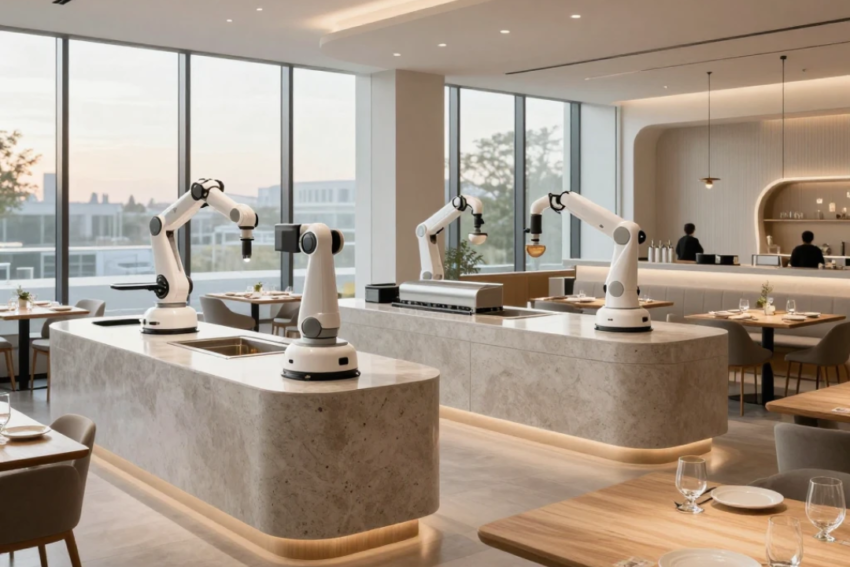
Some restaurants even use robotic cooking systems that can prepare meals quickly while maintaining high quality standards.
5. Food Delivery Optimization
Online food delivery services rely heavily on AI. Intelligent algorithms determine the fastest delivery routes, predict delivery times, and optimize driver assignments.
AI also helps restaurants forecast demand during peak hours, ensuring faster service and improved customer experiences.
AI Improves Food Safety
Food safety is one of the biggest concerns in the food industry. AI helps monitor food storage conditions, detect contamination, and identify quality issues before products reach consumers.
Smart sensors continuously monitor temperature, humidity, and storage environments. If unsafe conditions are detected, businesses receive immediate alerts, reducing the risk of food spoilage and foodborne illnesses.
AI also helps track food products throughout the supply chain, making recalls faster and more efficient if problems occur.
Reducing Food Waste with AI
Food waste is a global challenge. AI helps businesses reduce waste by accurately predicting customer demand and inventory requirements.
Restaurants can prepare the right amount of food based on historical sales data and seasonal trends. Grocery stores use AI to monitor expiration dates and optimize stock management.
By reducing unnecessary waste, businesses save money while supporting environmental sustainability.
AI in Restaurant Management
Restaurant owners use AI to improve daily operations in several ways, including:
- Inventory management
- Employee scheduling
- Customer service automation
- Sales forecasting
- Dynamic menu pricing
AI-powered chatbots answer customer questions, accept reservations, and process online orders 24/7. This reduces workload for staff while improving customer support.
Restaurant managers also use AI-generated reports to make informed business decisions based on real-time data.
AI and Customer Experience
Customer experience has become a major competitive advantage in the food industry. AI enhances this experience by offering:
- Personalized food recommendations
- Faster online ordering
- Voice-assisted ordering
- Automated customer support
- Loyalty program management
These features create a smoother dining experience while increasing customer engagement and satisfaction.
Benefits of AI in Food
The growing adoption of AI offers numerous benefits for businesses and consumers.
Increased Efficiency
AI automates repetitive tasks, allowing employees to focus on more valuable work.
Better Food Quality
Automated quality inspections improve consistency and reduce human error.
Lower Operating Costs
AI reduces labor costs, minimizes waste, and optimizes resource usage.
Improved Customer Satisfaction
Personalized recommendations and faster service enhance the overall customer experience.
Enhanced Food Safety
Continuous monitoring reduces health risks and ensures compliance with food safety standards.
Sustainability
AI supports environmentally friendly practices by reducing waste and optimizing energy consumption.
Challenges of AI in the Food Industry
Despite its many advantages, AI also presents several challenges.
High Initial Investment
Implementing AI systems requires significant financial investment, which may be difficult for small businesses.
Data Privacy
Businesses collect large amounts of customer data. Protecting this information is essential for maintaining trust and complying with privacy regulations.
Employee Training
Staff members need proper training to operate AI-powered systems effectively.
Technology Dependence
Businesses that rely heavily on AI must maintain reliable systems and cybersecurity measures to prevent disruptions.
The Future of AI in Dining
The future of AI in food looks promising. As technology advances, restaurants and food companies will continue adopting smarter solutions to improve efficiency and customer satisfaction.
Future innovations may include fully automated restaurants, AI nutrition coaches, robotic chefs, intelligent food packaging, and advanced predictive analytics.
Consumers can also expect healthier meal recommendations based on personal health data and wearable devices, making dining more personalized than ever before.
Best Practices for Businesses Using AI
To maximize the benefits of AI, food businesses should:
- Invest in reliable AI technology.
- Train employees regularly.
- Protect customer data with strong cybersecurity.
- Continuously monitor AI performance.
- Combine AI insights with human expertise.
- Focus on improving customer experiences.
Balancing technology with human creativity will remain essential for long-term success.
Conclusion
Artificial Intelligence is transforming every stage of the food industry, from farming and manufacturing to restaurant operations and food delivery. AI improves efficiency, enhances food safety, reduces waste, and creates personalized dining experiences that benefit both businesses and consumers.
Although challenges such as implementation costs and data privacy remain, the advantages of AI continue to outweigh the risks. As innovation accelerates, AI will play an even greater role in shaping the future of dining.
Businesses that embrace AI today will be better positioned to meet changing customer expectations, improve operational performance, and remain competitive in an increasingly digital world. The future of dining is smarter, faster, safer, and more sustainable—and Artificial Intelligence is leading the way.