
Introduction
Artificial Intelligence (AI) is transforming industries across the globe, and the food industry is among the biggest beneficiaries of this technological revolution. From agriculture and food production to restaurant management and food delivery, AI is helping businesses improve efficiency, reduce costs, enhance food safety, and provide better customer experiences.
Consumers today expect high-quality food, fast service, and personalized recommendations. Meeting these expectations is challenging, especially as demand continues to grow. Artificial Intelligence offers smart solutions by analyzing large amounts of data, automating repetitive tasks, and making accurate predictions that help businesses make informed decisions.
The global food industry is rapidly embracing AI-powered technologies to improve productivity and sustainability. Whether it is a farmer using AI to monitor crop health or a restaurant using AI to recommend meals based on customer preferences, the impact of Artificial Intelligence is becoming more visible every day.
This article explores how Artificial Intelligence is transforming the food industry, its major applications, benefits, challenges, and future opportunities.
What Is Artificial Intelligence in the Food Industry?
Artificial Intelligence in the food industry refers to the use of intelligent computer systems, machine learning, robotics, and data analytics to improve food production, processing, distribution, marketing, and customer service.
Unlike traditional software, AI systems learn from data and continuously improve their performance. They can identify patterns, predict future outcomes, automate decision-making, and perform tasks that previously required human intelligence.
AI is now being used throughout the entire food supply chain, from farms to restaurant tables.
Applications of Artificial Intelligence in the Food Industry
1. Smart Farming
Agriculture is the foundation of the food industry. AI helps farmers grow healthier crops while reducing production costs.
AI-powered drones, sensors, and satellite imaging monitor:
- Soil conditions
- Crop health
- Weather patterns
- Water requirements
- Pest infestations
By analyzing this information, AI recommends the best time to plant, irrigate, fertilize, and harvest crops. This improves crop yields while reducing water usage and environmental impact.
2. Food Manufacturing
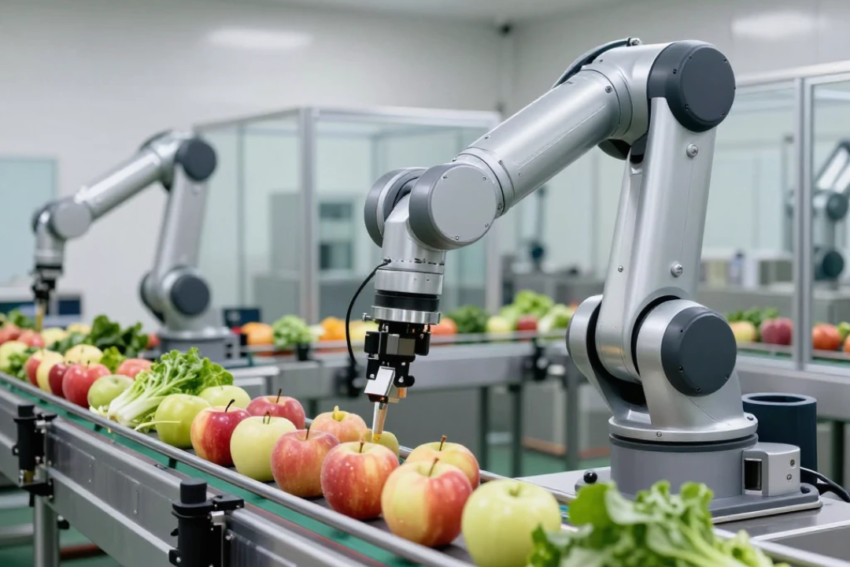
Food manufacturers use AI to automate production lines and improve product quality.
Machine learning systems inspect food products using high-resolution cameras that detect defects faster than manual inspections.
AI also predicts equipment failures before they happen, reducing downtime and maintenance costs.
Benefits include:
- Faster production
- Improved quality control
- Reduced manufacturing errors
- Lower operating costs
3. Food Safety and Quality Control
Food safety is one of the most important aspects of the food industry.
AI helps companies monitor food quality throughout production and transportation.
Smart sensors continuously measure:
- Temperature
- Humidity
- Storage conditions
- Product freshness
If unsafe conditions occur, AI immediately alerts managers before food becomes unsafe for consumption.
AI also helps identify contamination risks, reducing food recalls and protecting public health.
4. Restaurant Automation
Restaurants are increasingly using Artificial Intelligence to improve daily operations.
AI-powered systems can:
- Take customer orders
- Process payments
- Recommend menu items
- Predict customer demand
- Manage reservations
- Schedule employees
Some restaurants even use robotic chefs and automated cooking systems that prepare meals with consistent quality.
Automation allows restaurant staff to focus more on customer service.
5. Personalized Customer Experience
Today’s customers expect personalized dining experiences.
Artificial Intelligence analyzes customer data, including previous orders, dietary preferences, allergies, and favorite cuisines.
Based on this information, AI recommends meals customers are most likely to enjoy.
Personalization helps restaurants increase customer satisfaction, improve loyalty, and boost sales.
6. Food Delivery Optimization
Online food delivery has experienced tremendous growth.
AI improves food delivery services by:
- Selecting the fastest delivery routes
- Predicting delivery times
- Matching drivers with nearby orders
- Reducing fuel consumption
- Improving delivery accuracy
Customers receive their food faster, while delivery companies reduce operational costs.
Artificial Intelligence Reduces Food Waste
Food waste remains a major global challenge.
Restaurants, supermarkets, and food manufacturers often produce more food than customers purchase.
AI helps solve this problem by predicting future demand based on:
- Historical sales
- Weather forecasts
- Seasonal trends
- Local events
- Consumer behavior
Businesses can prepare the right amount of food, reducing unnecessary waste while increasing profitability.
AI also monitors expiration dates and inventory levels, ensuring food is sold before it expires.
AI Improves Supply Chain Management
Food products pass through many stages before reaching consumers.
Artificial Intelligence improves supply chain management by tracking products from farms to stores.
AI helps businesses:
- Forecast demand
- Optimize inventory
- Reduce transportation delays
- Monitor product freshness
- Improve warehouse management
Better supply chain management results in fresher products and lower transportation costs.
Benefits of Artificial Intelligence in the Food Industry
Increased Efficiency
AI automates repetitive tasks, allowing employees to focus on higher-value work.
Better Decision-Making
AI analyzes large datasets and provides valuable insights that help businesses make smarter decisions.
Improved Food Safety
Continuous monitoring helps prevent contamination and reduces foodborne illnesses.
Lower Costs
Automation reduces labor expenses, minimizes waste, and improves resource management.
Higher Customer Satisfaction
Personalized recommendations and faster service improve the overall customer experience.
Sustainability
AI supports environmentally friendly farming practices, reduces food waste, and improves energy efficiency.
Challenges of Artificial Intelligence in the Food Industry
Although AI offers many advantages, businesses also face several challenges.
High Implementation Costs
Advanced AI technologies require significant investment in hardware, software, and employee training.
Small businesses may find these costs difficult to manage.
Data Security
AI relies heavily on customer and operational data.
Businesses must protect sensitive information from cyber threats and unauthorized access.
Employee Training
Workers need proper training to understand and operate AI-powered systems effectively.
Without training, businesses cannot fully benefit from AI technology.
Technology Dependence
Businesses become increasingly dependent on technology.
System failures or software issues can temporarily disrupt operations.
Future of Artificial Intelligence in the Food Industry
The future of Artificial Intelligence in the food industry is incredibly promising.
Experts predict AI will become even more integrated into food production, restaurant operations, and customer experiences.
Future developments may include:
- Fully automated restaurants
- AI-powered nutrition planning
- Robotic food preparation
- Smart kitchens
- Advanced food quality monitoring
- Personalized meal planning based on health data
- Predictive inventory management
As AI continues to evolve, businesses that adopt these technologies early will gain a competitive advantage.
Why Businesses Should Invest in AI
Investing in Artificial Intelligence helps food businesses remain competitive in today’s digital marketplace.
AI allows companies to:
- Improve productivity
- Reduce operational costs
- Increase food safety
- Enhance customer satisfaction
- Make data-driven decisions
- Support sustainable business practices
Businesses that combine AI technology with skilled employees can achieve long-term growth and success.
Conclusion
Artificial Intelligence is revolutionizing the food industry by improving every stage of the food supply chain, from farming and manufacturing to restaurants and food delivery. AI enables businesses to produce safer food, reduce waste, optimize operations, and deliver personalized customer experiences.
Although challenges such as implementation costs and data security still exist, the long-term benefits of AI far outweigh the obstacles. As technology continues to advance, Artificial Intelligence will become an even more essential part of the global food industry.
Companies that embrace AI today will be better prepared for future market demands, improve operational efficiency, and provide higher-quality products and services. Artificial Intelligence is not just shaping the future of the food industry—it is already transforming the way food is produced, managed, and enjoyed worldwide.