
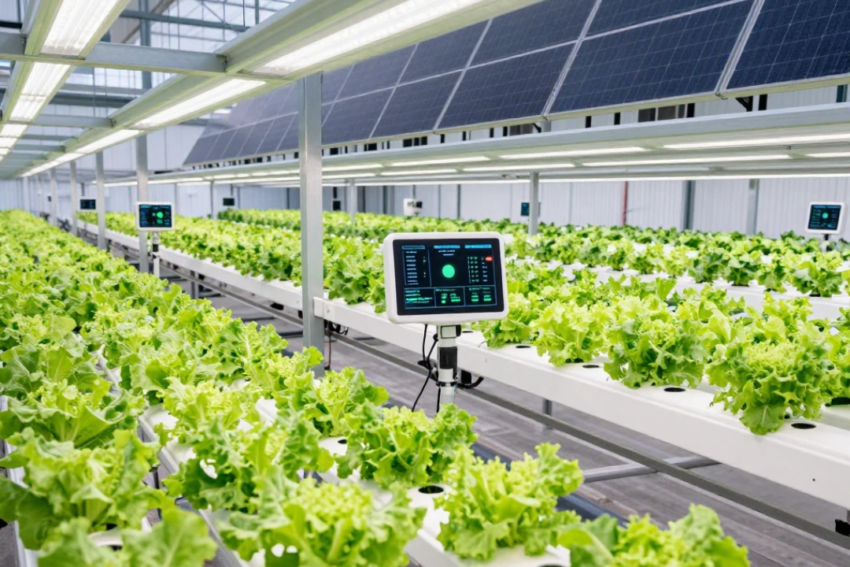
Introduction
The global food system is facing serious challenges, including climate change, population growth, food waste, resource shortages, and increasing demand for nutritious food. Traditional methods of farming and food production are no longer enough to meet future needs while protecting the environment. This is where AI and technology are creating a more sustainable food system by improving efficiency, reducing waste, and helping industries make smarter decisions.
Artificial Intelligence (AI), Internet of Things (IoT), robotics, automation, and advanced data analytics are transforming every stage of the food supply chain. From smart farming and precision agriculture to intelligent food distribution and waste reduction, technology is helping create a food system that is more productive and environmentally friendly.
The combination of AI and modern technology is not only improving how food is produced but also changing how it is processed, transported, stored, and consumed. These innovations are creating new opportunities to build a sustainable food future for generations to come.
This article explores how AI and technology are revolutionizing the food industry and creating a smarter, more sustainable food system.
What Is a Sustainable Food System?
A sustainable food system is a method of producing, distributing, and consuming food that protects the environment while supporting economic and social needs.
A sustainable food system focuses on:
- Reducing food waste
- Conserving natural resources
- Improving agricultural efficiency
- Protecting ecosystems
- Providing safe and nutritious food
Technology plays a major role in achieving these goals by helping farmers, businesses, and consumers make better decisions.
The Role of AI in Sustainable Food Production
Artificial Intelligence is becoming one of the most powerful tools for improving food sustainability.
AI systems can analyze large amounts of data from farms, markets, and supply chains to identify patterns and provide accurate predictions.
AI helps with:
- Crop monitoring
- Disease detection
- Weather forecasting
- Yield prediction
- Resource optimization
By using AI, farmers can increase productivity while reducing unnecessary use of water, fertilizers, and energy.
AI-Powered Smart Farming
Smart farming is one of the biggest examples of how AI is improving sustainability.
Smart farms use technologies such as:
- AI algorithms
- Sensors
- Drones
- Satellite imaging
- Automated machinery
These tools collect real-time information about crops and farming conditions.
Farmers can use this data to make better decisions about:
- Planting schedules
- Irrigation
- Fertilizer application
- Pest control
This reduces waste and improves overall farm efficiency.
Precision Agriculture: Using Data for Better Farming
Precision agriculture uses technology to provide accurate information about farmland.
Instead of treating an entire field the same way, precision farming allows farmers to understand the specific needs of different areas.
AI-powered precision agriculture helps farmers:
- Apply the right amount of water
- Reduce chemical usage
- Improve crop quality
- Increase productivity
This approach saves resources and creates a more sustainable farming process.
AI and Food Waste Reduction
Food waste is one of the biggest problems in the global food system.
AI technology helps reduce waste by improving planning and management.
AI can predict:
- Consumer demand
- Market trends
- Food requirements
Businesses can use this information to produce and store the correct amount of food.
Supermarkets and restaurants can reduce waste by using AI-based inventory systems that monitor product freshness and demand.
Smart Supply Chains and Food Distribution
Food often gets wasted during transportation and storage.
Technology is improving food supply chains through smart monitoring systems.
IoT devices and AI platforms can track:
- Temperature
- Humidity
- Product location
- Storage conditions
This helps maintain food quality from farms to consumers.
Smart supply chains reduce spoilage and improve efficiency throughout the food journey.
IoT Technology in Sustainable Food Systems
The Internet of Things connects devices and allows them to exchange information.
In agriculture and food production, IoT devices can monitor important conditions in real time.
Examples include:
- Soil moisture sensors
- Smart irrigation systems
- Temperature monitoring devices
- Automated farming equipment
IoT technology helps reduce resource waste and improves decision-making.
AI-Based Climate and Weather Prediction
Climate change creates uncertainty for farmers around the world.
AI-powered weather prediction tools help farmers prepare for changing conditions.
AI can analyze:
- Weather patterns
- Historical climate data
- Environmental conditions
This allows farmers to:
- Choose better planting times
- Protect crops from extreme weather
- Improve harvest planning
Climate-smart agriculture supported by AI can make food production more resilient.
Robotics and Automation in Agriculture
Robotics is transforming modern farming by automating difficult tasks.
Agricultural robots can help with:
- Planting seeds
- Harvesting crops
- Removing weeds
- Monitoring fields
Automation reduces labor challenges and improves farming accuracy.
Robots can also perform tasks with greater precision, reducing waste and improving sustainability.
AI and Sustainable Food Processing
Technology is improving sustainability beyond farming.
Food processing companies use AI to optimize production systems.
AI helps with:
- Quality control
- Energy management
- Production planning
- Waste reduction
Smart processing systems can identify inefficiencies and reduce unnecessary resource consumption.
Sustainable Food Packaging Through Technology
Packaging plays an important role in reducing food waste.
Modern technology is creating smarter and more sustainable packaging solutions.
Examples include:
- Smart freshness indicators
- Biodegradable materials
- Improved preservation methods
Smart packaging helps consumers understand food quality and reduces unnecessary disposal.
Alternative Food Production and AI Innovation
Technology is also supporting new methods of food production.
Examples include:
- Lab-grown food
- Plant-based proteins
- Vertical farming
- Fermentation-based foods
AI helps researchers develop more efficient production methods and improve food quality.
These innovations can reduce pressure on traditional agriculture and create more sustainable food options.
Benefits of AI and Technology in Food Sustainability
1. Reduced Environmental Impact
AI and technology help reduce:
- Water waste
- Energy consumption
- Chemical usage
- Greenhouse gas emissions
This supports a healthier planet.
2. Improved Food Security
A more efficient food system can produce more food with fewer resources.
Technology helps increase productivity and improve access to food worldwide.
3. Better Resource Management
AI helps optimize the use of:
- Water
- Land
- Fertilizers
- Energy
This creates a more efficient and sustainable food production process.
4. Lower Food Waste
Smart technologies help identify problems early and prevent unnecessary food losses.
Better storage, transportation, and inventory management reduce waste significantly.
5. Increased Farming Efficiency
Farmers can produce higher-quality crops while reducing costs and resource usage.
Technology provides valuable insights that improve farming decisions.
Challenges of Using AI in the Food System
Although AI and technology provide many benefits, some challenges remain.
High Costs
Advanced technologies require significant investment.
Small farmers may struggle to afford smart farming equipment and digital tools.
Lack of Technical Skills
Many farmers and food businesses need training to use modern technologies effectively.
Education and support are important for successful adoption.
Data Privacy and Security
AI and IoT systems collect large amounts of information.
Protecting agricultural and business data is necessary to maintain security.
Technology Accessibility
Some regions lack reliable internet access and digital infrastructure.
Making technology available worldwide is important for creating a truly sustainable food system.
The Future of AI and Sustainable Food Technology
The future of food production will be shaped by continuous technological innovation.
Future developments may include:
- Fully automated smart farms
- AI-powered food management systems
- Advanced agricultural robots
- Intelligent supply chains
- Personalized nutrition technology
As AI becomes more advanced, it will help create a food system that is more efficient, sustainable, and adaptable.
The integration of AI with agriculture and food production will play a major role in feeding a growing global population while protecting natural resources.
Conclusion
AI and technology are creating a more sustainable food system by transforming agriculture, food production, distribution, and consumption. Through smart farming, precision agriculture, AI prediction, robotics, and intelligent supply chains, technology is helping reduce waste and improve efficiency.
Although challenges such as cost, accessibility, and technical skills remain, the potential benefits of AI-driven food innovation are enormous.
The future of food will depend on smarter technologies that balance productivity with sustainability. By combining artificial intelligence with sustainable practices, the world can build a food system that is more efficient, environmentally responsible, and prepared for future challenges.