
Introduction
Artificial Intelligence (AI) is changing industries around the world, and food production is one of the sectors experiencing the greatest transformation. As the global population continues to grow, the demand for safe, nutritious, and affordable food is increasing rapidly. Traditional food production methods alone are no longer enough to meet these growing needs. This is where Artificial Intelligence is making a significant difference.
AI helps farmers, food manufacturers, and processing companies improve efficiency, reduce waste, increase productivity, and maintain high food quality standards. By using machine learning, robotics, computer vision, and predictive analytics, businesses can make smarter decisions and automate complex tasks throughout the food production process.
From monitoring crops and optimizing irrigation to inspecting food quality and managing supply chains, AI is revolutionizing food production at every stage. This article explores how AI is transforming food production, its key applications, benefits, challenges, and what the future holds for the industry.
What Is AI in Food Production?
Artificial Intelligence in food production refers to the use of intelligent software, machine learning algorithms, sensors, robotics, and data analysis to improve how food is grown, processed, packaged, and distributed.
Unlike traditional automation, AI systems learn from data and improve over time. They analyze large volumes of information, recognize patterns, predict outcomes, and make decisions with minimal human intervention.
The goal of AI in food production is to increase efficiency, improve food safety, reduce costs, and support sustainable agriculture while meeting the rising demand for food.
The Importance of AI in Modern Food Production
Food production faces several major challenges, including climate change, labor shortages, increasing production costs, food waste, and growing consumer expectations.
Artificial Intelligence helps solve these challenges by providing accurate insights and automating repetitive tasks. Businesses can produce more food using fewer resources while maintaining consistent quality.
AI also supports sustainable farming practices, helping protect natural resources for future generations.
Applications of AI in Food Production
1. Smart Farming
Food production begins on the farm. AI enables farmers to monitor crops more effectively using drones, sensors, satellite imagery, and machine learning models.
AI analyzes information such as:
- Soil moisture
- Weather conditions
- Crop health
- Nutrient levels
- Pest activity
Based on this data, farmers receive recommendations about irrigation, fertilization, and pest control. This improves crop yields while reducing water and chemical usage.
Smart farming helps increase productivity while protecting the environment.
2. Precision Agriculture
Precision agriculture is one of the most successful applications of Artificial Intelligence.
Instead of treating an entire field equally, AI identifies which areas require additional water, fertilizer, or pest treatment.
This targeted approach offers several benefits:
- Reduced production costs
- Higher crop yields
- Lower environmental impact
- Better resource management
Precision agriculture helps farmers maximize efficiency while minimizing waste.
3. Automated Food Processing
AI-powered machines are transforming food processing facilities.
Robotic systems can perform repetitive tasks such as:
- Sorting
- Cutting
- Packaging
- Labeling
- Quality inspection
Automation speeds up production while reducing human error and labor costs.
AI also monitors equipment performance, predicting maintenance needs before machines break down, reducing costly production delays.
4. Food Quality Inspection
Maintaining consistent food quality is essential for consumer trust.
Artificial Intelligence uses computer vision technology to inspect food products much faster than manual inspections.
AI systems can detect:
- Damaged products
- Incorrect packaging
- Size variations
- Color differences
- Surface defects
Only products that meet quality standards move forward in the production process.
This improves customer satisfaction while reducing waste.
5. Food Safety Monitoring
Food safety remains one of the highest priorities in food production.
AI helps manufacturers monitor food throughout processing and storage.
Smart sensors continuously track:
- Temperature
- Humidity
- Storage conditions
- Processing environments
If unsafe conditions occur, AI immediately alerts operators, allowing quick corrective action before products become unsafe.
AI also helps identify contamination risks earlier than traditional monitoring methods.
6. Supply Chain Optimization
Food production extends beyond factories.
AI improves supply chain management by predicting demand, tracking inventory, and optimizing transportation routes.
Benefits include:
- Reduced delivery delays
- Better inventory control
- Fresher food products
- Lower transportation costs
AI also provides real-time tracking, improving transparency throughout the food supply chain.
7. Predictive Maintenance
Unexpected equipment failures can interrupt food production and increase operational costs.
Artificial Intelligence monitors machine performance using sensors that detect unusual vibrations, temperature changes, and energy consumption.
Instead of waiting for equipment to fail, AI predicts maintenance requirements before breakdowns occur.
This minimizes downtime and improves productivity.
How AI Reduces Food Waste
Food waste affects both businesses and the environment.
Artificial Intelligence helps reduce waste by accurately forecasting customer demand using:
- Historical sales
- Seasonal trends
- Weather forecasts
- Consumer purchasing behavior
- Market demand
Manufacturers can produce the right quantity of food while avoiding overproduction.
AI also monitors expiration dates and warehouse inventory, ensuring products are distributed before they spoil.
Reducing waste improves profitability while supporting environmental sustainability.
Benefits of AI in Food Production
Increased Productivity
AI automates repetitive tasks, allowing businesses to produce more food in less time.
Improved Food Quality
Computer vision systems maintain consistent quality standards throughout production.
Enhanced Food Safety
Continuous monitoring reduces contamination risks and improves regulatory compliance.
Cost Reduction
Automation lowers labor costs, reduces waste, and improves operational efficiency.
Better Resource Management
AI optimizes water usage, fertilizer application, and energy consumption.
Sustainability
Smart farming techniques reduce environmental impact while supporting long-term agricultural productivity.
Challenges of Implementing AI in Food Production
Despite its many advantages, Artificial Intelligence also presents several challenges.
High Initial Costs
Purchasing AI software, robotics, and monitoring equipment requires significant investment.
Small food producers may find implementation expensive.
Employee Training
Workers need specialized training to operate AI-powered technologies effectively.
Businesses must invest in education and skill development.
Data Privacy
AI depends on large amounts of operational and customer data.
Protecting this information from cyber threats is essential.
Technology Integration
Older manufacturing systems may not easily integrate with modern AI solutions.
Businesses often need additional upgrades before implementation.
The Future of AI in Food Production
Artificial Intelligence is expected to become even more advanced over the coming years.
Future innovations may include:
- Fully autonomous farms
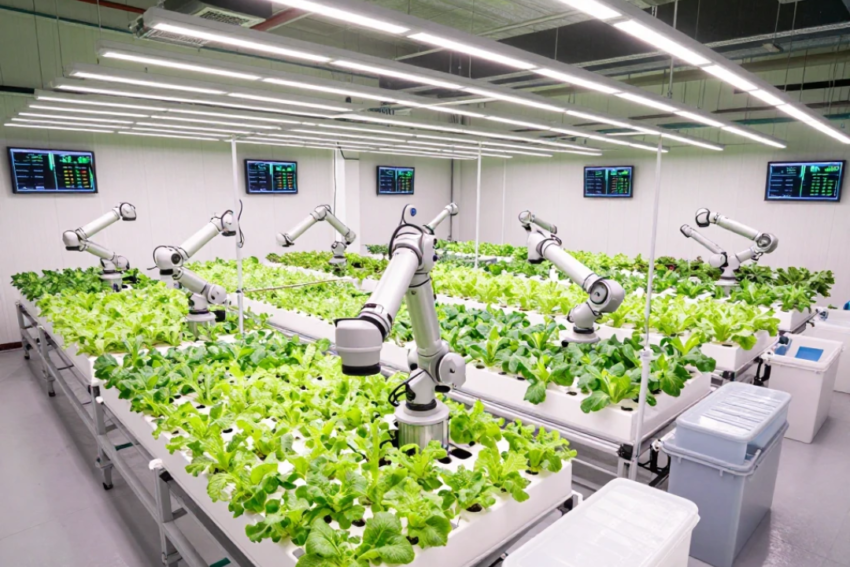
- AI-controlled greenhouses
- Advanced agricultural robots
- Intelligent food packaging
- Real-time crop monitoring
- Personalized nutrition recommendations
- Self-optimizing production facilities
These technologies will help produce more food while using fewer natural resources.
As AI becomes more affordable, even small and medium-sized food businesses will benefit from its capabilities.
Why Food Companies Should Adopt AI
Businesses that invest in Artificial Intelligence gain significant competitive advantages.
AI helps companies:
- Increase production efficiency
- Improve product quality
- Reduce operational costs
- Strengthen food safety
- Minimize food waste
- Enhance sustainability
- Respond quickly to changing market demand
Organizations that combine AI technology with experienced professionals can build stronger, more resilient food production systems.
Best Practices for Using AI in Food Production
To maximize the benefits of Artificial Intelligence, companies should:
- Invest in reliable AI technologies.
- Train employees regularly.
- Monitor AI performance continuously.
- Protect operational data with strong cybersecurity.
- Integrate AI gradually into existing production systems.
- Use AI insights alongside human expertise for better decision-making.
Following these best practices ensures successful AI adoption while reducing implementation risks.
Conclusion
Artificial Intelligence is revolutionizing food production by making every stage of the process smarter, faster, and more efficient. From precision agriculture and automated food processing to quality inspection and supply chain optimization, AI is helping businesses produce safer, higher-quality food while reducing costs and minimizing waste.
Although challenges such as implementation costs, employee training, and data security remain, the long-term advantages of AI far outweigh these obstacles. As technology continues to evolve, AI will play an even greater role in creating sustainable, efficient, and innovative food production systems.
Companies that embrace Artificial Intelligence today will be better prepared to meet future food demands, improve operational performance, and remain competitive in a rapidly changing global market. AI is not only transforming food production—it is shaping the future of the entire food industry.