
Introduction
Agriculture has always been the foundation of human civilization, but modern farming faces many challenges, including climate change, water shortages, soil degradation, and increasing global food demand. Traditional farming methods alone are becoming less effective in meeting future needs while protecting the environment. This is why Sustainable Food Technology in Agriculture is emerging as a powerful solution for creating a smarter and more efficient food system.
Smart farming combines advanced technologies such as Artificial Intelligence (AI), Internet of Things (IoT), robotics, drones, automation, and data analytics to improve agricultural productivity while reducing environmental impact.
By using sustainable food technology, farmers can produce more food with fewer resources, reduce waste, improve crop quality, and make better decisions based on real-time information.
The future of agriculture is moving toward intelligent farming systems where technology and sustainability work together to create a more reliable and environmentally friendly food supply.
This article explores how sustainable food technology is transforming agriculture, the role of smart farming, its benefits, challenges, and future potential.
What Is Sustainable Food Technology in Agriculture?
Sustainable food technology in agriculture refers to the use of modern technological solutions to improve food production while protecting natural resources and reducing environmental damage.
The main goal is to create farming systems that are:
- More productive
- Environmentally responsible
- Resource-efficient
- Economically sustainable
Sustainable agricultural technology helps farmers optimize the use of:
- Water
- Land
- Energy
- Fertilizers
- Seeds
Examples of sustainable food technology include:
- Precision agriculture
- Smart irrigation systems
- AI-powered farming
- Agricultural robotics
- Vertical farming
- Smart greenhouses
- Digital farm management systems
Why Smart Farming Is Important for the Future
The world’s population is growing, and food demand is increasing every year. At the same time, agriculture is facing serious environmental challenges.
Climate Change Challenges
Climate change affects farming through:
- Extreme weather conditions
- Changing rainfall patterns
- Rising temperatures
- Increased crop diseases
Smart farming technologies help farmers adapt by providing accurate data and better planning tools.
Limited Natural Resources
Agriculture requires large amounts of water and land.
Sustainable food technology helps reduce resource waste by improving efficiency and using data-driven farming methods.
Increasing Food Demand
Future agriculture must produce more food without causing further environmental damage.
Smart farming provides solutions that increase productivity while maintaining sustainability.
Key Technologies Driving Smart Farming
1. Artificial Intelligence in Agriculture
Artificial Intelligence is one of the most important technologies transforming modern agriculture.
AI systems analyze agricultural data to help farmers make smarter decisions.
AI can help with:
- Crop monitoring
- Disease detection
- Weather prediction
- Yield forecasting
- Pest management
By identifying problems early, AI helps reduce crop losses and improve productivity.
2. Internet of Things (IoT) in Farming
IoT technology connects farming devices through the internet, allowing real-time monitoring of agricultural conditions.
IoT sensors can measure:
- Soil moisture
- Temperature
- Humidity
- Crop health
- Water levels
Farmers can use this information to make accurate decisions and improve resource management.
For example, smart irrigation systems can automatically provide the correct amount of water based on soil conditions.
3. Precision Agriculture
Precision agriculture is a major part of sustainable food technology.
Instead of treating an entire farm the same way, precision farming uses data to understand the specific needs of different areas.
Benefits include:
- Reduced fertilizer use
- Lower water consumption
- Improved crop yields
- Better soil management
Precision agriculture allows farmers to increase production while minimizing environmental impact.
4. Smart Irrigation Systems
Water is one of the most valuable resources in agriculture.
Smart irrigation technology uses sensors and automation to deliver water only when crops need it.
Advantages include:
- Reduced water waste
- Healthier crops
- Lower farming costs
- Improved sustainability
Smart irrigation is especially important in regions facing water shortages.
5. Agricultural Robotics
Robotics is changing the way farming tasks are performed.
Agricultural robots can assist with:
- Planting seeds
- Harvesting crops
- Removing weeds
- Monitoring plants
Robots improve accuracy and reduce the need for manual labor.
Future farms may use advanced robots that can perform multiple tasks automatically.
6. Drone Technology in Smart Farming
Drones are becoming valuable tools for modern farmers.
Agricultural drones can:
- Monitor large fields
- Capture crop images
- Identify plant diseases
- Analyze farm conditions
Drone technology helps farmers detect problems quickly and improve decision-making.
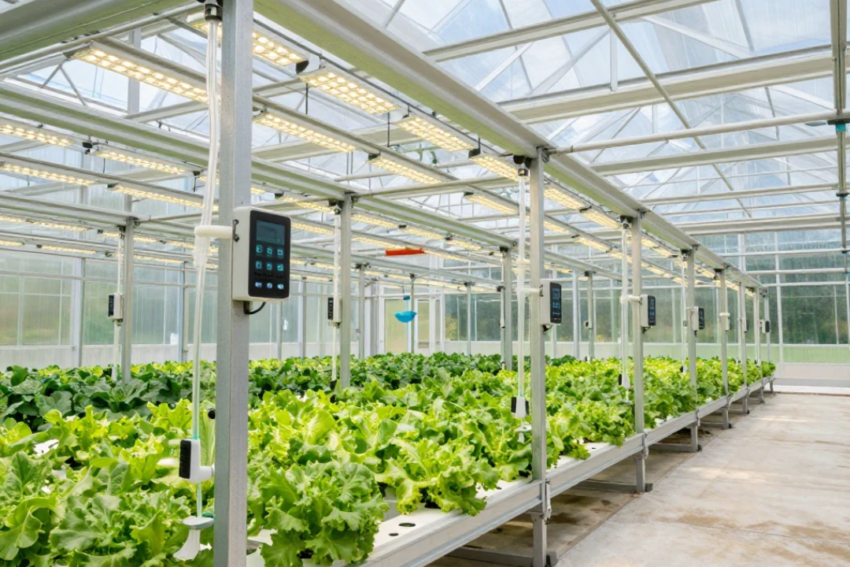
7. Smart Greenhouses
Smart greenhouses use technology to create controlled growing environments.
They use:
- Automated climate control
- Sensors
- AI monitoring
- Smart lighting systems
Smart greenhouses allow farmers to grow crops throughout the year while using fewer resources.
Benefits of Sustainable Food Technology in Agriculture
1. Increased Crop Production
Smart farming technologies help farmers improve productivity by providing accurate information about crop conditions.
Better decisions lead to higher-quality harvests.
2. Reduced Environmental Impact
Sustainable technology helps reduce:
- Water waste
- Chemical usage
- Energy consumption
- Soil damage
This supports environmentally friendly farming practices.
3. Better Resource Management
Technology helps farmers use resources more efficiently.
Smart systems optimize:
- Irrigation
- Fertilizer application
- Energy usage
- Land management
This creates a more sustainable agricultural process.
4. Improved Food Quality
Advanced monitoring systems help maintain better crop quality.
Farmers can identify diseases and environmental issues before they affect production.
5. Reduced Food Waste
Smart farming reduces waste by improving:
- Crop planning
- Harvest timing
- Storage methods
- Supply chain management
More food reaches consumers with fewer losses.
Sustainable Food Technology and Environmental Protection
Agriculture has a major impact on the environment, but technology can help reduce this impact.
Sustainable farming technology supports:
Soil Protection
Smart systems help prevent soil damage by optimizing fertilizer and water use.
Water Conservation
Automated irrigation reduces unnecessary water consumption.
Lower Carbon Emissions
Efficient farming equipment and better resource management reduce greenhouse gas emissions.
Challenges of Sustainable Food Technology
Despite its advantages, sustainable food technology faces several challenges.
High Implementation Costs
Advanced farming technologies require investment in:
- Equipment
- Software
- Infrastructure
Small farmers may find adoption difficult.
Lack of Technical Knowledge
Farmers need training to use:
- AI systems
- Data platforms
- Automated equipment
Education is essential for successful technology adoption.
Limited Digital Infrastructure
Some rural areas lack:
- Internet access
- Reliable electricity
- Technology support
Improving infrastructure is necessary for widespread smart farming.
Data Security Concerns
Smart farming systems collect large amounts of agricultural data.
Protecting this information is important to ensure security and trust.
The Future of Smart Farming
The future of agriculture will be shaped by continuous technological innovation.
Future smart farming developments may include:
- Fully automated farms
- AI-powered farming assistants
- Advanced agricultural robots
- Autonomous farming vehicles
- Real-time global food monitoring systems
Smart farms will become more connected and intelligent, allowing farmers to produce food more efficiently and sustainably.
The combination of AI, automation, and sustainable practices will create a new era of agriculture.
How Sustainable Food Technology Supports Global Food Security
Food security is one of the biggest challenges facing the world.
Sustainable food technology helps improve food security by:
- Increasing agricultural productivity
- Reducing food losses
- Improving resource efficiency
- Supporting climate adaptation
By making farming smarter and more sustainable, technology can help provide food for future generations.
Conclusion
Sustainable Food Technology in Agriculture is transforming the future of smart farming by combining innovation with environmental responsibility. Technologies such as AI, IoT, robotics, precision agriculture, and smart irrigation are helping farmers produce more food while protecting natural resources.
Although challenges such as cost, accessibility, and technical skills remain, the benefits of sustainable agricultural technology are clear.
The future of farming will be smarter, more efficient, and more sustainable. By embracing advanced technologies, agriculture can meet growing food demands while creating a healthier and more sustainable planet.